A blast from the past III: Modified gravity theories could open the universe's shortcuts
Over a decade ago, I started a blog about my PhD journey. That blog is now discontinued, but I wrote some content for it that I think still stands the test of time and deserves to be revisited. The original text was written in Norwegian.
The text below was originally published on May 4, 2015, and was about how modified gravity can be used as a springboard for science-fiction to introduce supernatural elements while still being scientifically accurate.
Look out for 💬 boxes where I add some present-day comments to the old text.
Modified gravity theories are used primarily to bridge the gap between observations of the universe and the theoretical predictions of the standard model in cosmology. It turns out, fortunately, that these theories can have even more useful properties, such as giving us wormholes.
Science fiction's biggest problem
The universe is large, and the distances between objects in it are enormous. The sun's nearest neighbouring star is a full four light years away, and unfortunately, the fact is that there is little chance of humanity being able to travel to other stars within the next two centuries using rocket technology.
This poses significant problems for science fiction authors who want to write stories without breaking with known science, or for the daydreamer who hopes to travel to other stars within their own lifetime. Fortunately, there are many creative ideas for solving this problem.
Wormholes
Wormholes are, in short, a shortcut through the universe and a science fiction author's best friend. They allow a traveller to cover infinite distances in just a few moments. A range of TV series (Star Trek, Stargate) and films (Contact, Interstellar) make use of these convenient holes, all with one big assumption: that wormholes can function in our universe at all.
Can wormholes exist?
Today's universe has a structure that does not allow the formation of wormholes, but the very early universe may have had a completely different form that could have allowed wormholes to form.
There are solutions to both of these problems, but they are weak ones. The first problem can be solved by assuming that a wormhole was created at the dawn of time and has somehow survived until today, but even wormholes have a limited lifespan, and a wormhole surviving that long would be extremely unlikely. Alternatively, a microscopic wormhole could be enlarged to a macroscopic scale, but no known process for doing this exists.
The second problem can be solved by sending exotic matter into the wormhole to stabilise it so that we can travel through it. The problem is that exotic matter is hypothetical matter with properties we would otherwise describe as unphysical, such as negative mass.
The conclusion, unfortunately, is that even though wormholes can exist according to the mathematics of general relativity, there exists no way for them to form, and they are unstable even if they were to exist.
Modified gravity theories
Fortunately, there is a branch of astrophysics concerned with the study of the universe as a whole: cosmology, which may hold a solution, even if it wasn't looking for one.
Cosmologists work to build a theoretical model that reflects reality, and they have arrived at a standard model that is almost perfect.
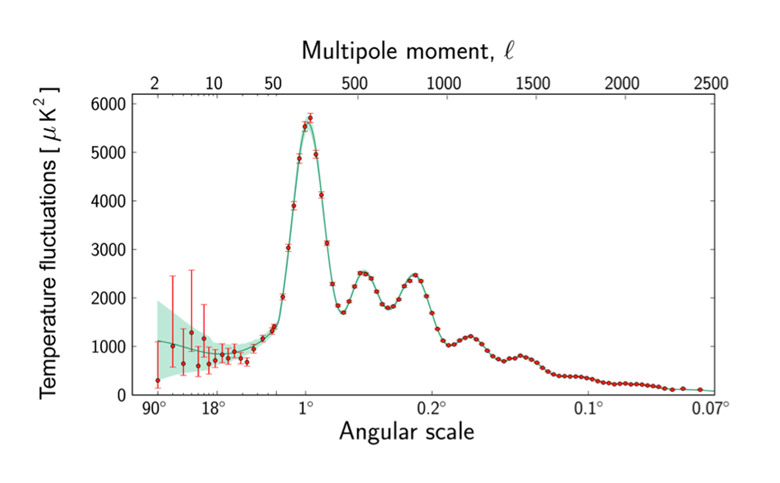
One solution cosmologists have come up with is to modify our understanding of gravity by adjusting Einstein's general theory of relativity.
The main purpose of modified gravity theories is to get observations to align better with theory on a large scale. A viable modified gravity theory has to give us better agreement with the data, but must also ensure that things are not changed on smaller scales in ways that would cause problems, such as making planet formation impossible, and so on. Research is therefore ongoing into what other consequences these theories might have on non-cosmological scales.
The wormhole strikes back
Surprisingly, there are several modified gravity theories that preserve the universe as it should be on smaller scales, while also changing the conditions for wormhole formation and behaviour. It turns out that you can get theories in which wormholes can form today, and which simultaneously allow wormholes to remain stable without needing exotic matter.
Science fiction authors who have been anxious about using wormholes in their stories because they are not well supported by the standard model can breathe a sigh of relief and hope that the standard model turns out not to be entirely right.
The question now, naturally, is: what else might be hiding behind modifications of Einstein's general theory of relativity that cosmologists haven't anticipated?
My old blog post just ends... doesn't it? I think my intention was for the end to be an open invitation to sci-fi authors to let their imaginations run wild, because if wormholes could be real, what else could prove to be real down the line.